
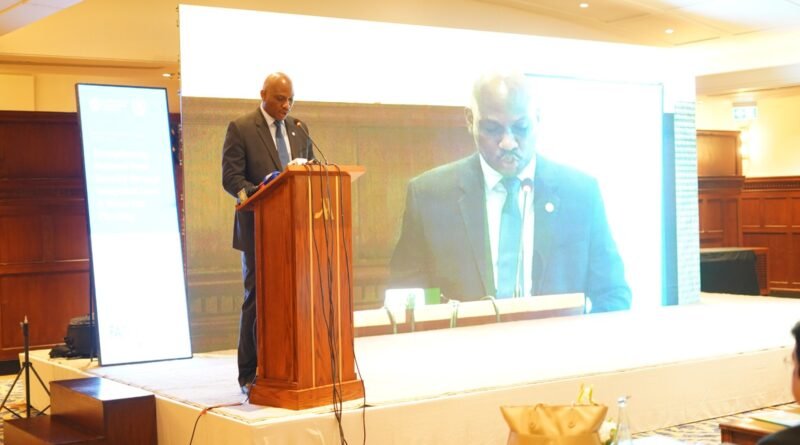
Pakistan launches national initiative to protect agricultural land, strengthen food security
ISLAMABAD, Sept 10 (ABC): The Government of Pakistan and the Food and Agriculture Organization of the United Nations (FAO) on Wednesday launched a national initiative to promote evidence-based land and water-use planning and protect productive agricultural land.
Federal Minister for Planning, Development and Special Initiatives Prof Ahsan Iqbal formally launched the National Technical Working Group at an inception workshop held under FAO’s Technical Cooperation Programme.
The programme will be implemented in collaboration with the Ministry of National Food Security and Research and the Ministry of Planning, Development and Special Initiatives.
Pakistan’s food demand is projected to increase by at least 50 percent by 2050, while rapid urban expansion is putting growing pressure on productive agricultural land and water resources. The initiative seeks to strengthen the evidence base for land-use planning and develop practical approaches to conserving these resources.
“Food security is at the core of FAO’s mandate, and few issues are more important than the one that brings us together today: how to protect the agricultural land that feeds our people while meeting the demands of a growing population and protecting our natural resources, especially water,” said FAO Representative in Pakistan James Okath.
The working group comprises representatives of the federal and provincial governments, academia and technical experts. It will promote institutional coordination, data sharing and evidence-based policymaking.
The initiative is aligned with the government’s priorities under Uraan Pakistan, the National Water Policy and the National Food Security Policy. It will also build on existing land and water management efforts at the national and provincial levels.
Prof Ahsan Iqbal said findings from different studies had underlined the urgency of protecting the country’s agricultural land.
“When different studies, using different methods and different sources of evidence, arrive at the same conclusion, we should pay attention. And the conclusion is clear: Pakistan can no longer afford to treat the protection of agricultural land as a secondary concern,” he said.
Over the next two years, the programme will work to strengthen integrated land and water-use planning through institutional capacity-building, policy support and digital tools.
Its key components include the development of a Land Use Zoning Framework and a Digital Land Use Change Assessment Platform. These tools are expected to support better decision-making, protect productive agricultural land and promote sustainable development across Pakistan.