
One Health approach urged to tackle emerging infectious diseases
ISLAMABAD, June 3 (ABC): Experts have called for adopting a comprehensive One Health approach to strengthen Pakistan’s preparedness and response to emerging infectious diseases, stressing the need for closer coordination among human, animal and environmental health sectors.
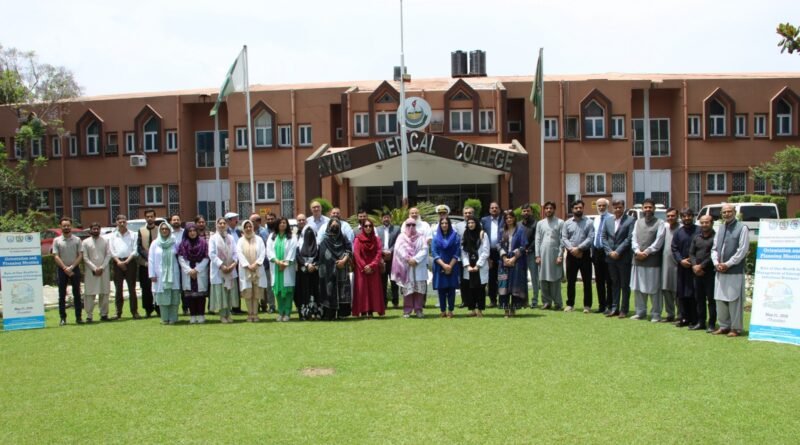
The call was made during a one-day advocacy seminar titled “Role of One Health for Management of Emerging Infectious Diseases,” organized by the Health Services Academy (HSA) in collaboration with Ayub Medical College (AMC) under the project “One Health Workforce Development and Coordination for Pandemic Readiness.”
The seminar brought together senior clinicians and representatives from the health, livestock, food safety, environment and planning sectors to discuss strategies for improving disease surveillance, prevention and response mechanisms.
Addressing the participants, Chief Guest Prof Dr Irfanuddin Khattak, Dean and CEO of the Medical Teaching Institution, Ayub Medical College, emphasized the importance of intersectoral collaboration in managing disease outbreaks.
He appreciated the broad representation of stakeholders and noted that effective preparedness requires coordinated action across human, animal and environmental health systems.
Speaking on the occasion, National One Health Coordinator Prof Dr Tariq Mahmood Ali said Pakistan possesses valuable surveillance systems and datasets, but many of them operate independently, limiting their effectiveness in providing timely warnings and responses.
He stressed the importance of integrating field-level reporting with decision-making processes at district and provincial levels to improve outbreak detection and containment.
According to him, stronger linkages between surveillance data and policy decisions can help prevent localized health threats from escalating into larger public health emergencies.
Prof Dr Umer Farooq, Dean and Head of Community Medicine at Ayub Medical College, highlighted the need for greater coordination between hospitals, infection prevention and control systems, and public health institutions.
He proposed the establishment of a district-level technical working group comprising representatives of relevant sectors to promote integrated implementation of the One Health framework.
Prof Dr Umer suggested that Abbottabad could serve as a model district for demonstrating effective One Health coordination, which could later be replicated in other parts of the country.
The seminar also featured sessions on workforce development, integrated disease surveillance, food safety, water, sanitation and hygiene (WASH)-related risks, and the links between environmental and public health challenges.
Participants emphasized that sustained collaboration among all stakeholders is essential for strengthening the country’s ability to detect, prevent and respond rapidly to future epidemics and pandemics.